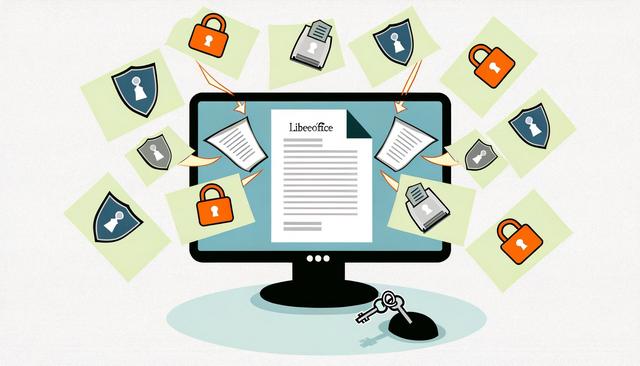
Securing Your Documents in LibreOffice: Best Practices to Protect Your Files
Securing documents in LibreOffice is essential when you create, edit, store, or share files that contain sensitive information. LibreOffice is a popular open-source office suite that provides a robust and free alternative to commercial software. However, just like with any software, it is crucial to adopt security measures to protect your sensitive documents. In this article, we will guide you through the best practices for securing your documents in LibreOffice.
These best practices focus on practical actions already available to users: password protection, encryption, backups, safer file sharing, regular updates, security extensions, and user awareness. Used together, they help reduce the risk of unauthorized access, data loss, and accidental exposure of important files.
Understanding the Importance of Document Security
Document security is crucial for protecting sensitive information from unauthorized access, data loss, and cyber threats. By using LibreOffice, you have the ability to enhance the security of your files with several built-in features.
A document may contain personal data, financial details, contracts, internal notes, or work in progress. If such files are shared without protection or stored without backups, they can become exposed or lost. LibreOffice includes options that help users protect files during daily work, especially when documents are saved, shared, exported, or modified by several people.
The main security actions covered in this guide are:
- Encrypting documents with passwords.
- Creating regular backups of sensitive files.
- Sharing files more safely, including encrypted PDF exports.
- Managing editing permissions where appropriate.
- Keeping LibreOffice updated.
- Using reliable extensions carefully.
- Training users to follow safe document habits.
Encrypt Your Documents with Passwords
Why Encryption is Essential
Encryption is one of the most effective methods to secure your documents. By encrypting a document, you protect it with a password, making the content inaccessible without the appropriate decryption key.
This is especially useful when a file contains confidential information or when it may be stored on a shared computer, external drive, or cloud storage account. A password-protected document adds a security barrier before the file content can be opened.
How to Add a Password in LibreOffice
To protect a LibreOffice document with a password, follow these steps:
- Open the document you wish to secure.
- Click on "File" in the menu bar.
- Select "Save As".
- In the dialog box that opens, check the option "Save with a password".
- Click "Save", then enter and confirm your password.
Use strong passwords that combine letters, numbers, and symbols for maximum security.
A strong password should be difficult to guess and different from passwords used for other accounts or files. Avoid simple names, common words, or predictable combinations. If several people need access to the same protected document, share the password through a secure communication method rather than placing it in the same message or location as the file.
Regularly Backup Your Sensitive Files
Effective Backup Methods
Regularly backing up your documents is essential to avoid data loss. LibreOffice allows you to automate this process through its auto-backup options. To enable this feature:
- Go to "Tools", then "Options".
- Under "Load/Save", select "General".
- Check the option "Always create a backup copy".
Also, consider storing these backups in a secure location, such as an encrypted external hard drive or a secure cloud storage service.
Backups are useful when a document is deleted by mistake, overwritten, damaged, or stored on a device that becomes unavailable. For sensitive documents, backups should be protected with the same care as the original file. If a backup contains confidential content, keep it in a location that is not accessible to unauthorized users.
For better organization, keep clear file names and separate current working documents from backup copies. This makes it easier to identify the most recent usable version if recovery is needed.
Use Collaboration Features Safely
Secure File Sharing
When sharing documents with other users, ensure you do so securely. Exporting your documents as encrypted PDFs can be an effective solution. To do this:
- Go to "File", then "Export As".
- Select the PDF format.
- Enable the "Secure PDF" option and set a password if necessary.
An encrypted PDF can be useful when you want to send a document for reading while limiting access to its content. This is helpful for reports, forms, contracts, presentations, or files that should not be opened by everyone who receives or stores the file.
Permission Settings
LibreOffice also allows you to adjust editing permissions to ensure that only the intended user can modify the document. In the save options, you can choose to restrict permissions to authorized individuals.
Permission settings help reduce accidental changes when a document is shared for review or consultation. Before sending a file, check whether the recipient needs to edit it or only read it. This simple step helps limit unnecessary modification rights.
Regularly Update LibreOffice
Importance of Updates
Software updates often contain vital security patches. Ensure that your version of LibreOffice is always up to date to protect against discovered vulnerabilities. To check for available updates:
- Go to "Help".
- Click on "Check for Updates".
Immediately install any available updates to keep your document security up to date.
Updating LibreOffice also helps ensure that the office suite continues to run with the latest available fixes for your installed version. Make update checks part of your regular maintenance routine, especially on computers used to open files from several sources or to work with sensitive documents.
Use Security Extensions
Choose Reliable Extensions
LibreOffice allows the addition of extensions to enhance its features. Some extensions focus on security and can provide an extra layer of protection. Before installing an extension, ensure it comes from a reliable source and is regularly updated.
Extensions can add useful functions, but they should be selected carefully. Install only the extensions you need, review their source, and keep them updated when updates are available. Removing unused extensions can also make it easier to manage your LibreOffice environment.
Awareness and Training
Train Your Team
Document security doesn't solely rely on technical tools but also on user awareness. Ensure that individuals who have access to your documents are trained in security best practices, such as recognizing phishing attempts, using complex passwords, and following backup procedures.
Training is important because many document security problems come from everyday actions: opening unexpected files, using weak passwords, sending the wrong attachment, or forgetting to create backups. Clear rules help users know how to protect documents before they save, export, or share them.
Useful training reminders include:
- Check the recipient before sending a sensitive file.
- Use complex passwords for encrypted documents.
- Do not share passwords in the same place as the protected file.
- Create backups before major edits.
- Verify that LibreOffice is updated regularly.
Summary of LibreOffice Document Security Practices
| Security practice | Purpose | Where it helps |
|---|---|---|
| Password encryption | Protects document content from unauthorized access. | Sensitive files stored or shared with others. |
| Regular backups | Reduces the risk of losing important documents. | Files that are frequently edited or contain important data. |
| Encrypted PDF export | Adds protection when sharing documents in PDF format. | Reports, forms, contracts, or read-only shared files. |
| Permission settings | Limits changes to authorized users. | Collaborative documents and review workflows. |
| Updates and extensions | Helps maintain a safer LibreOffice installation. | All computers used to open, edit, or share documents. |
FAQ: Secure Documents in LibreOffice
Can I password protect a LibreOffice document?
Yes. You can protect a LibreOffice document by using "Save As" and selecting the option "Save with a password" before saving the file.
Why should I backup sensitive LibreOffice files?
Backups help prevent data loss if a file is deleted, overwritten, damaged, or no longer available from its original location.
Can I share a LibreOffice document as a secure PDF?
Yes. LibreOffice allows you to export a document as a PDF and enable a secure PDF option with a password when needed.
Why are LibreOffice updates important for security?
Updates often include security patches. Checking for updates through the Help menu helps keep your LibreOffice installation current.
In conclusion, securing your documents in LibreOffice is a proactive approach that requires both technical tools and ongoing user awareness. By applying these best practices, you protect your sensitive data while making the most of LibreOffice's features. Emphasize regular training and the adoption of security measures to minimize risks related to document security.

